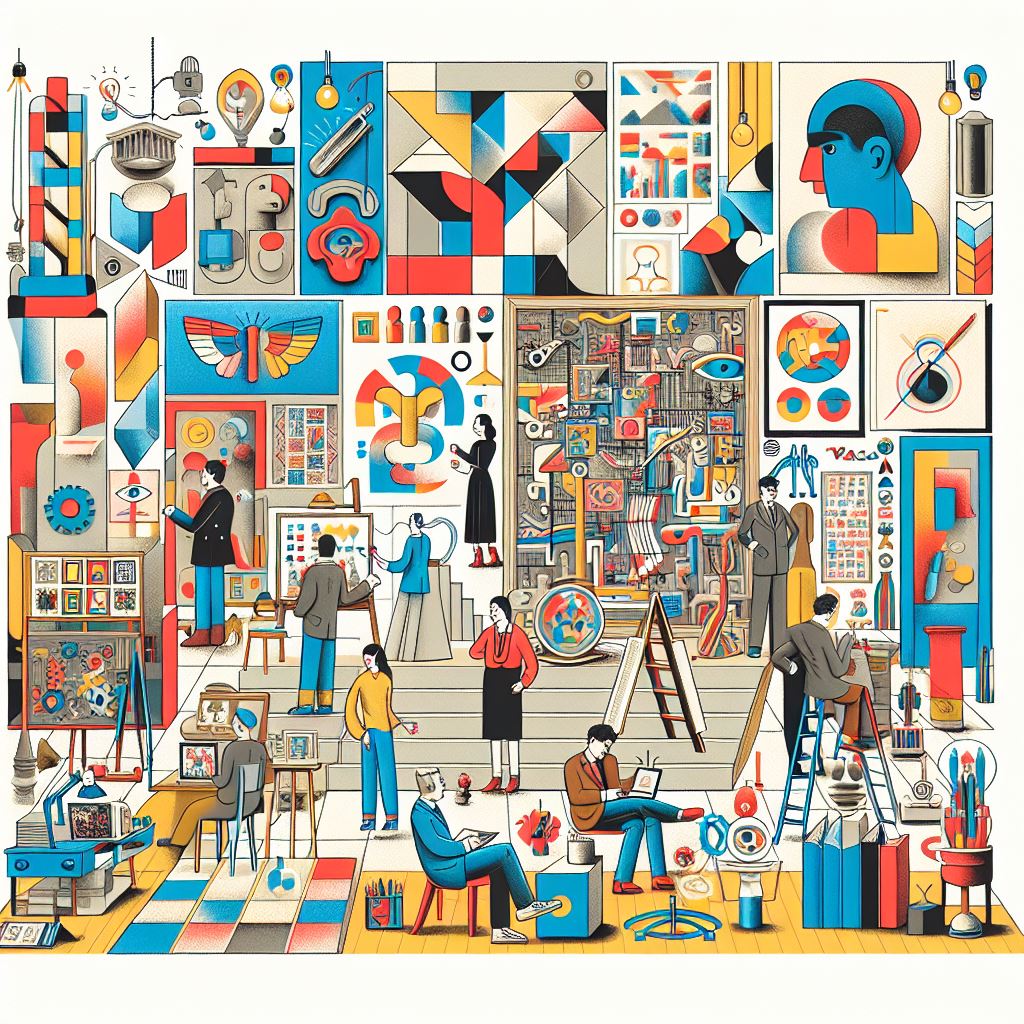
The Life and Legacy of Bruno Munari: Books, Influences, Collaborations, and Innovations
Bruno Munari (1907–1998) was a polymath of the 20th century—an Italian artist, designer, educator, and writer who revolutionized how we perceive art, design, and creativity. Munari’s work ranged from avant-garde art movements to the development of educational methods that continue to inspire creative thinkers. His collaborations with other Italian designers and his founding of innovative companies cemented his place as one of the most influential figures in modern design.

Early Life and Introduction to Art
Born in Milan, Munari spent much of his early life in a small town in Veneto, which deeply influenced his love for nature—a recurring theme in his works. Returning to Milan as a teenager, he was introduced to the vibrant Futurist movement led by Filippo Tommaso Marinetti. Munari joined the movement in the late 1920s, embracing its embrace of modern technology, dynamic aesthetics, and innovation.
Artistic Philosophy: Beyond Aesthetics
Munari believed that art should be functional, interactive, and accessible to all. This philosophy is evident in his playful yet profound works, which often challenge the conventional boundaries between art, design, and education. He saw creativity as a tool for problem-solving and believed that art could enrich everyday life.
Munari famously said:
“Art must not be separated from everyday life, but must remain rooted in it.”
Key Companies and Contributions to Design
Munari’s role in establishing design firms and working with Italian industries was pivotal to his career. Some of his notable professional endeavors include:
- Studio Munari (1940s)
Munari established his own design studio to create everything from industrial products to graphic design. His work for advertising agencies like Mondadori brought him into collaboration with leading Italian firms. - Olivetti
As a consultant for Olivetti, Munari worked on promotional designs and visual communication. His minimalist and elegant approach complemented the company’s forward-thinking ethos, helping shape its iconic identity. - Danese Milano
In the late 1950s, Munari collaborated with Danese Milano, a company specializing in high-end design objects. His creations, such as the “Falkland Lamp” (1964), showcased his commitment to simplicity and functionality. The lamp, made with stretchable fabric, is celebrated for its elegant and innovative design. - Rizzoli and Mondadori
Munari’s collaborations with these publishing giants resulted in revolutionary book designs, including tactile and interactive children’s books. His ability to turn books into multisensory experiences was unmatched.
Relationships with Major Italian Designers
Munari’s career flourished alongside other giants of Italian design. His relationships and collaborations with these designers fostered a dynamic creative ecosystem:
- Achille Castiglioni
Munari and Castiglioni shared a commitment to functional yet playful design. They often explored the boundaries of industrial design, producing objects that were both innovative and practical. - Enzo Mari
Like Munari, Mari was deeply committed to creating accessible design and democratizing art. Both artists shared an interest in modular systems, simplicity, and a profound respect for craftsmanship. - Gio Ponti
Gio Ponti, one of the most influential architects and designers of his time, frequently intersected with Munari’s work in publications and exhibitions. Their shared admiration for clean, modern aesthetics and functionality defined mid-century Italian design. - Ettore Sottsass
Although their styles diverged, Munari and Sottsass collaborated through their association with Olivetti and Danese Milano. Munari’s minimalism often contrasted with Sottsass’s expressive designs, but both believed in pushing creative boundaries.
Munari and the Italian Design Renaissance
Munari was a central figure in the post-war Italian design renaissance, a period marked by Italy’s rise as a leader in industrial and graphic design. He helped transform Milan into a global design hub, alongside architects and designers who shaped the aesthetic of modern Italy. His emphasis on experimentation and playful innovation resonated during this period of rapid industrial growth and cultural change.
Books: Merging Creativity and Education
Munari’s books are a testament to his interdisciplinary genius. Beyond their artistic value, they were tools for teaching creativity.
- “Prelibri” (1980s): This series of small books, designed for pre-literate children, used textures, colors, and shapes to stimulate sensory learning.
- “Supplemento al Dizionario Italiano” (1963): Munari created this humorous exploration of Italian words, blending typography with wit.
- “The Tactile Workshops”: Munari’s focus on tactile experiences inspired books for children with visual impairments.
Innovation in Interactive Art
Munari’s “useless machines,” kinetic sculptures created in the 1930s, are considered precursors to modern interactive art. These playful, mobile structures embodied his belief that art should inspire wonder and interaction.
Awards and Recognition
Munari received numerous accolades during his lifetime, including:
- The Compasso d’Oro Award for his contributions to design.
- Honorary memberships in design organizations, recognizing his role as a global innovator.
- Inclusion in major international exhibitions, from MoMA in New York to the Venice Biennale.
Munari’s Enduring Influence
Bruno Munari’s legacy transcends his era. His approach to blending art with everyday life, his educational innovations, and his collaborative spirit continue to inspire designers, artists, and educators worldwide. Munari’s ideas remain particularly relevant in an age that values interdisciplinary solutions and creative thinking.
By integrating humor, play, and simplicity into his work, Munari taught the world that creativity is not a privilege of the elite but a skill that anyone can nurture. His legacy lives on through his timeless designs, cherished books, and the countless creative minds he continues to influence.

 edvaldo b. guimarães filho