SPFx Calendar Control with PnP React Controls
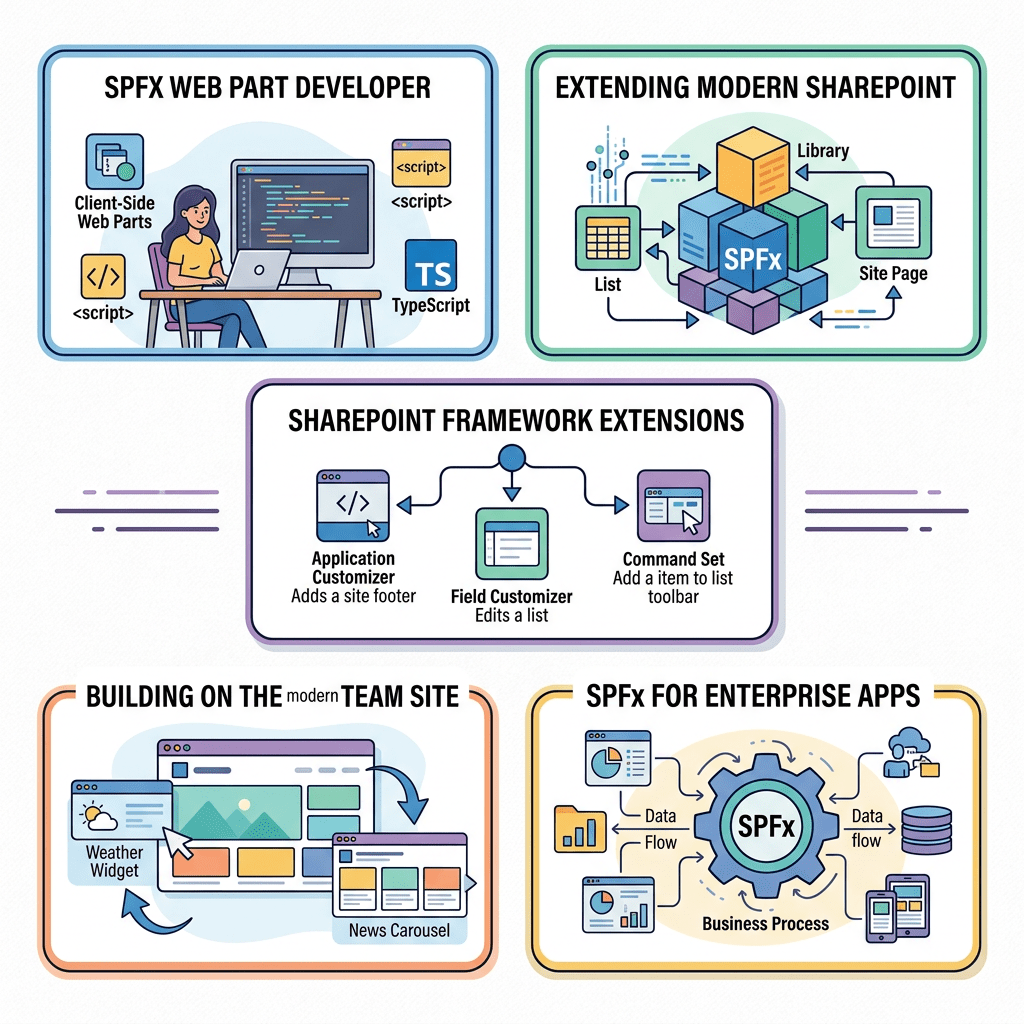
The SharePoint Framework (SPFx) is the modern development model for building client-side web parts in Microsoft SharePoint Online. It allows developers to build responsive, reusable, and interactive components using React, TypeScript, and Fluent UI.
One of the most practical UI controls available in the PnP SPFx React Controls library is the Calendar control. It provides a clean visual representation of events, meetings, deadlines, and schedules without requiring developers to build a calendar system from scratch.
Official documentation:
PnP Calendar Control Documentation
Why use the Calendar control?
In real-world SharePoint projects, calendars are extremely common:
- Team meetings
- Project milestones
- Training schedules
- Deadlines
- Task planning
- Event management
Instead of manually creating a custom calendar grid, the PnP Calendar control simplifies this.
Benefits:
- Faster development
- Native SPFx integration
- Event object support
- Modern responsive UI
- Fluent UI compatibility
- Supports custom metadata like category, importance, and location
Installation
Inside your current SPFx solution:
npm install @pnp/spfx-controls-react --savenpm installheft start
Calendar Web Part Example
This example creates two events:
- A weekly development sync meeting
- A project deadline
CalendarWp.tsx
import * as React from 'react';import { Calendar, IEvent } from '@pnp/spfx-controls-react/lib/calendar';import { ICalendarWpProps } from './ICalendarWpProps';const events: IEvent[] = [ { id: '1', title: 'Weekly Sync: Development Team', start: '2025-07-08T10:00:00', end: '2025-07-08T11:00:00', location: 'Microsoft Teams', category: 'Meeting', isOnlineMeeting: true, }, { id: '2', title: 'Project Deadline', start: '21/07/2025 15:00:00', end: '21/07/2025 16:00:00', importance: 'High', }];const CalendarWp: React.FC<{}> = ({}) => { return ( <Calendar events={events} /> );};export default CalendarWp;
Code explanation
Imports
import { Calendar, IEvent } from '@pnp/spfx-controls-react/lib/calendar';
Here we import:
- Calendar → the UI control
- IEvent → the TypeScript interface for event objects
This gives strong typing and IntelliSense.
Event array
const events: IEvent[] = [...]
The Calendar consumes an array of event objects.
Each event supports properties like:
| Property | Description |
|---|---|
| id | Unique identifier |
| title | Event title |
| start | Start date/time |
| end | End date/time |
| location | Event location |
| category | Event category |
| importance | Priority |
| isOnlineMeeting | Online meeting flag |
First event
{ id: '1', title: 'Weekly Sync: Development Team',}
This represents a normal team meeting.
Additional metadata:
location: 'Microsoft Teams'
Shows where the event happens.
category: 'Meeting'
Helps classify events.
isOnlineMeeting: true
Useful for remote collaboration scenarios.
Second event
{ title: 'Project Deadline'}
This demonstrates a deadline event.
Important field:
importance: 'High'
Useful to visually emphasize urgent activities.
Important date format note
Your first event uses ISO format:
2025-07-08T10:00:00
This is the recommended format.
Your second event uses:
21/07/2025 15:00:00
This may cause parsing issues depending on browser locale.
Recommended fix:
start: '2025-07-21T15:00:00',end: '2025-07-21T16:00:00',
Always prefer ISO 8601.
Render logic
<Calendar events={events} />
Very simple.
You pass the array and the control handles:
- rendering
- positioning
- timeline organization
- event display
This abstraction saves a lot of development time.
Practical use cases
Project Management
Display:
- sprint planning
- release dates
- retrospectives
HR Portals
Display:
- onboarding sessions
- interviews
- company holidays
Training Portals
Display:
- courses
- webinars
- certification sessions
Department Portals
Display:
- internal deadlines
- meetings
- team events
Best practices
1. Use ISO dates
Always:
YYYY-MM-DDTHH:mm:ss
Avoid locale strings.
2. Load events dynamically
Instead of hardcoding:
const events = [...]
Use:
- SharePoint Lists
- Microsoft Graph
- REST API
- PnPjs
3. Add business metadata
Useful examples:
- Department
- Priority
- Owner
- Teams Link
Final thoughts
The PnP Calendar control is one of the most useful scheduling components for SPFx solutions. It reduces implementation complexity while providing a modern, clean event visualization experience.
For enterprise SharePoint portals, this is a strong option when you need:
- project timelines
- team planning
- event scheduling
- milestone tracking
It is a practical control every SPFx developer should know.


