Edvaldo Guimrães Filho
-
PowerShell Guide: Granting Sites.Selected Permissions to a SharePoint Site (PnP.PowerShell)
PowerShell Guide: Granting Sites.Selected Permissions to a SharePoint Site (PnP.PowerShell) Sites.Selected is a two-step permission model: This article focuses on Step 2, using PnP.PowerShell. What you will use (the 4 core cmdlets) Microsoft Learn explicitly lists these PnP cmdlets for… Continue reading

-
Why you should NOT keep the .pfx next to the EXE
Best practice for unattended apps: Ensure only the scheduled task account can access the private key Import the certificate into Windows Certificate Store (LocalMachine or CurrentUser) Load by Thumbprint Below is exactly that: certificate stored in Windows Certificate Store, loaded… Continue reading
-
Building an Unattended SharePoint Online CSOM App with Sites.Selected (Certificate-Based Entra ID App-Only) — End-to-End Guide
Building an Unattended SharePoint Online CSOM App with Sites.Selected (Certificate-Based Entra ID App-Only) — End-to-End Guide This guide shows how to build a true unattended C# console app (no user login) that: The key concept: Sites.Selected grants zero access by… Continue reading

-
Building a True Unattended SharePoint Online CSOM App in C# (Certificate-Based Entra ID App-Only) — Visual Studio Step-by-Step
Building a True Unattended SharePoint Online CSOM App in C# (Certificate-Based Entra ID App-Only) — Visual Studio Step-by-Step This article walks you through creating a fully unattended (no interactive login) C# console app that: Why certificate? Microsoft’s SharePoint guidance for… Continue reading

-
Unattended SharePoint List Writer (Client Secret + Microsoft Graph) — Full Step-by-Step Guide (Microsoft Learn referenced)
Unattended SharePoint List Writer (Client Secret + Microsoft Graph) — Full Step-by-Step Guide (Microsoft Learn referenced) This article documents a working pattern to create a SharePoint list item unattended (no user interaction) using: Everything below is aligned with Microsoft Learn… Continue reading

-
Using Microsoft Graph Explorer to Resolve a SharePoint Site by Path (and Why It Matters)
Using Microsoft Graph Explorer to Resolve a SharePoint Site by Path (and Why It Matters) When you build automation against SharePoint Online (console apps, Azure Functions, Power Automate alternatives, SPFx utilities, migration tools, etc.), one of the first practical problems… Continue reading

-
Unattended (Client Secret) Console App to Create a SharePoint List Item (End-to-End)
Unattended (Client Secret) Console App to Create a SharePoint List Item (End-to-End) This article shows a complete, step-by-step path from Microsoft Entra ID (Azure AD) app registration to an unattended C# console app that creates a new item in a… Continue reading
-
Power Apps: How to Edit a Screen Correctly When You Use a Scrollable Container
When you build a Power Apps canvas app, a common pattern is using a scrollable container to fit large forms, galleries, and dynamic content on a single screen. The problem: in many cases, the designer doesn’t scroll the same way… Continue reading
-
Power Apps Switch() — a practical guide (with real formulas)
Power Apps Switch() — a practical guide (with real formulas) Switch() in Power Apps (Power Fx) is the cleanest way to replace long chains of If(…) when you’re checking one value against multiple cases. It reads like: “Given this value,… Continue reading

-
Power Apps Patch() with SharePoint: The Practical Mental Model (Create, Update, Upsert) + Full Code Patterns
When you build a canvas app that inserts and edits data in a SharePoint list, Patch() is one of the most important functions you’ll use. It gives you direct control over what gets saved, when it gets saved, and how… Continue reading

-
Understanding the SharePoint Framework Toolchain: RushStack and Heft
The SharePoint Framework (SPFx) provides a modern toolchain that integrates deeply with the open-source JavaScript ecosystem.Over time, Microsoft evolved this toolchain to improve build performance, modularity, and developer experience.Today, SPFx relies on the RushStack suite and Heft build orchestrator —… Continue reading

-
SharePoint Framework (SPFx) Compatibility and Installation Guide
The SharePoint Framework (SPFx) evolves with each release, introducing updated dependencies on Node.js (LTS versions), TypeScript, and React.To maintain compatibility and avoid environment issues, developers should always align their Node.js version and global toolchain with the specific SPFx version they… Continue reading

-
SPFx Compatibility & Install Commands
Below is a table listing key SPFx versions, their compatibility context (primarily Node.js and general toolchain), and the npm/global commands to install/upgrade them. SPFx Compatibility & Install Commands Below is a table listing key SPFx versions, their compatibility context (primarily… Continue reading

-
SPFX Versions
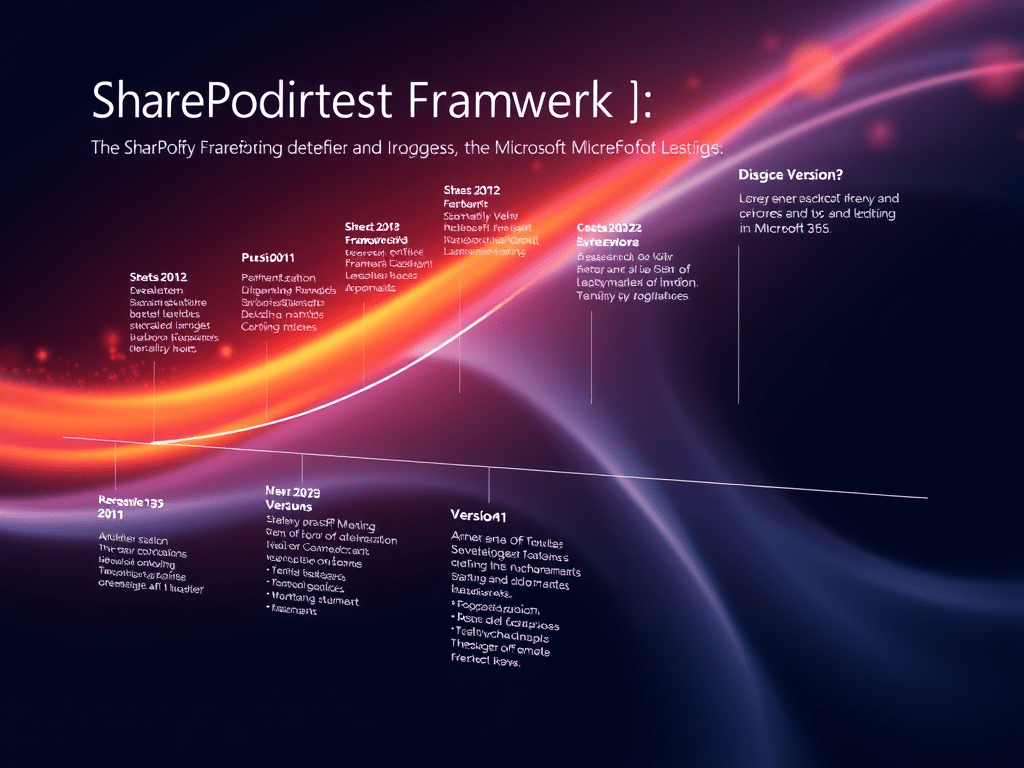
The SharePoint Framework (SPFx) is Microsoft’s client-side development model for modernizing and extending the SharePoint Online user experience, as well as for building customizations that span across Microsoft Teams, Viva Connections and other Microsoft 365 experiences. It was first made… Continue reading
-
SharePoint Framework (SPFx) Toolchain – Executive Summary
he SharePoint Framework (SPFx) toolchain is the foundation for building, packaging, and deploying client-side components in SharePoint Online and Microsoft 365. Through a combination of modern web technologies — Node.js, npm, Gulp, Webpack, TypeScript, and Yeoman — it transforms your… Continue reading

-
SharePoint Framework (SPFx) Toolchain – Part 4: Integration and Automation
After mastering packaging and deployment, the next step in the SPFx development journey is integrating your web parts with SharePoint Online and Microsoft 365 data. SPFx offers direct, authenticated access to SharePoint REST endpoints via SPHttpClient, and to broader Microsoft… Continue reading

-
SharePoint Framework (SPFx) Toolchain – Part 3: Packaging and Deployment
After compiling and bundling your SPFx solution (Parts 1 & 2), the final step is to package and deploy it so that users can install the web part or extension in SharePoint Online or Microsoft Teams. 📦 SharePoint Framework (SPFx)… Continue reading
-
SharePoint Framework (SPFx) Toolchain – Part 2: Inside the Build Process
In Part 1, we introduced the SPFx toolchain and its components.Now, let’s dive deep into what happens inside the build pipeline — specifically how Gulp, Webpack, and TypeScript coordinate to transform your source code into a deployable .sppkg package. Understanding… Continue reading

-
SharePoint Framework (SPFx) Toolchain – Part 2: Inside the Build Process
In Part 1, we introduced the SPFx toolchain and its components.Now, let’s dive deep into what happens inside the build pipeline — specifically how Gulp, Webpack, and TypeScript coordinate to transform your source code into a deployable .sppkg package. Understanding… Continue reading
-
SharePoint Framework (SPFx) Toolchain – Part 1: The Fundamentals
The SharePoint Framework (SPFx) is the modern development model for extending SharePoint Online and Microsoft 365 experiences.It enables developers to build client-side solutions using TypeScript, React, Node.js, and web tooling—integrated directly into the SharePoint page lifecycle. At its core, SPFx… Continue reading

-
Understanding the SharePoint Framework (SPFx) Version Lifecycle and Long-Term Support
Because SPFx integrates deeply with the Microsoft 365 ecosystem, every version has a defined lifecycle.Knowing how these versions are supported — and when they expire — helps you keep your solutions reliable, secure, and compatible with future updates of SharePoint… Continue reading

-
The Complete Compatibility Reference for SharePoint Framework (SPFx) and Node.js
Every SharePoint Framework project depends on a very specific set of tools:Node.js, TypeScript, React, and Gulp.The SPFx build system is tightly version-locked, meaning that if one part is out of sync, your project might not even compile. Knowing which combinations… Continue reading

-
How to Safely Upgrade an Existing SPFx Project to Node 22 LTS
Many SPFx developers reach a point where older projects (for example, 1.16 or 1.19) stop building after upgrading Node.js or installing new tools.This happens because every SPFx release supports only specific Node and TypeScript versions. The good news is that… Continue reading

-
Troubleshooting SharePoint Framework Build Errors After Upgrading Node.js or Packages
When you update Node.js, TypeScript, or SPFx packages, it’s common for your previously stable SharePoint Framework project to stop building.Messages appear that look cryptic at first glance — but almost all of them come down to one simple issue: version… Continue reading

-
Keeping SharePoint Framework Up to Date with Node 22 LTS
In every SharePoint Framework (SPFx) project, the file package.json defines how the entire environment works — which Node.js version is required, which SPFx libraries are installed, how React is integrated, and how Gulp builds your code. As Microsoft continuously updates… Continue reading

-
How to Safely Update Your SPFx Project When Node.js or Yeoman Changes
Updating your SharePoint Framework (SPFx) environment can be painful.Every time you upgrade Node.js or the Yeoman generator, old projects start throwing build errors, TypeScript mismatches, or Gulp crashes.This is not bad luck — it’s a version compatibility problem that affects… Continue reading
-
How to Update Your SPFx Project After Upgrading Yeoman or Node.js — Without Losing Your Mind
Here’s the full plain-text version of your article in English — rewritten from scratch with the latest 2025 information (including Node.js 22 LTS, as stated on Microsoft Learn).All examples, errors, and recommendations are now accurate for SPFx 1.20+ environments. How… Continue reading
-
Modern Authentication in SharePoint Online with MSAL and CSOM (C#)
When building console applications, Azure Functions, or desktop tools that interact with SharePoint Online, authentication is one of the most important challenges. Older approaches relied on credentials or app-only secrets, but today Microsoft recommends using Microsoft Authentication Library (MSAL) for… Continue reading
-
Understanding and Fixing “The request message is too big” in SharePoint CSOM Uploads
When migrating or uploading documents to SharePoint using the Client-Side Object Model (CSOM), you may encounter this error: The request message is too big. The server does not allow messages larger than 2,097,152 bytes. This error is common in automation,… Continue reading

-
Preserving File and Folder Metadata During SharePoint Library Migration (CSOM Approach)
Migrating document libraries between SharePoint sites is a common scenario during restructuring, modernization, or automation. However, one of the biggest challenges is preserving original metadata — specifically: By default, when uploading files or creating folders through CSOM, SharePoint automatically assigns… Continue reading
-
Understanding Yeoman and the Architecture of SharePoint Framework (SPFx)
Understanding Yeoman and the Architecture of SharePoint Framework (SPFx) Table of Contents 1. Introduction The SharePoint Framework (SPFx) is Microsoft’s modern development model for building client-side customizations in SharePoint Online and on-premises (2016–2019).It enables developers to build web parts, extensions,… Continue reading
-
Running the Migration with Progress Bar and Job Summary (Console App Example)
Excellent — here’s Section 9 of your full article, expanding it into a complete, production-style migration guide.This section shows how to run FileMigrationServiceV2 inside a console app with a progress bar, job summary, and estimated completion time. Running the Migration… Continue reading
-
Migrating SharePoint Libraries with Full Metadata, Version History, Check-In Comments, and Audit Logs (v2)
Migrating SharePoint Libraries with Full Metadata, Version History, Check-In Comments, and Audit Logs (v2) Overview In this enhanced version of the FileMigrationService, we extend the migration logic to: This version provides an auditable, production-ready migration path for complex SharePoint Online… Continue reading

-
Migrating SharePoint Document Libraries with Full Version and Metadata Preservation Using CSOM
When performing large-scale SharePoint Online migrations, one of the most challenging aspects is preserving document history, including: This article explains how to create a C# utility class that automates this process using the SharePoint Client-Side Object Model (CSOM). The sample… Continue reading
-
Fluent Video Hub — Part 4: Building a Power BI Dashboard for Video Analytics
In the previous parts, we built Fluent Video Hub, a modern SharePoint Framework web part using Fluent UI.It dynamically loads and plays .mp4 videos from SharePoint libraries, and in Part 3, it began saving view and rating events into a… Continue reading

-
Extending Fluent Video Hub: Carousel Navigation + Ratings with Fluent UI
Extending Fluent Video Hub: Carousel Navigation + Ratings with Fluent UI Overview In Part 1 we built Fluent Video Hub, a modern SPFx web part that lists and plays videos from a SharePoint document library using Fluent UI.In this follow-up,… Continue reading

-
Building Fluent Video Hub: a Modern SharePoint Video Player with Fluent UI
This article presents how to create a clean, light, and professional video player Web Part for SharePoint Online using the SharePoint Framework (SPFx) and Fluent UI React components.The result is a visually elegant player that dynamically loads .mp4 files from… Continue reading

-
How to Use Multiple Triggers in Power Automate with a Parent–Child Flow Pattern
In Power Automate, a single flow can only start from one trigger. You cannot place two different triggers (for example, “When an item is created” and “When an item is modified”) in the same flow.However, in many real scenarios —… Continue reading

-
Power BI: Converting Text Columns to Date in DAX (and Avoiding Type Conversion Errors)
Here is the same article rewritten entirely in English, in a professional, technical documentation style — with no emojis or informal language. Power BI: Converting Text Columns to Date in DAX (and Avoiding Type Conversion Errors) 1. Introduction One of… Continue reading
-
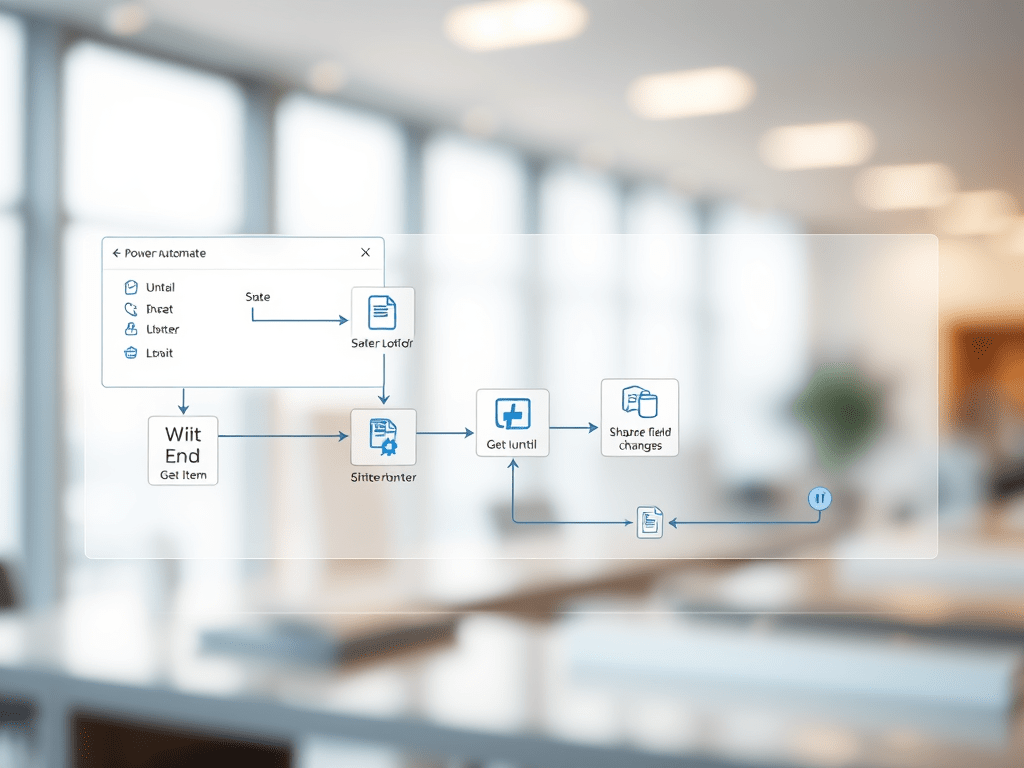
How to Wait Until a SharePoint Field Changes Its State
When automating SharePoint processes with Power Automate, it is common to encounter scenarios where a flow needs to pause until a specific field value changes — for example, waiting until a document is approved or a status column changes to… Continue reading
 edvaldo b. guimarães filho